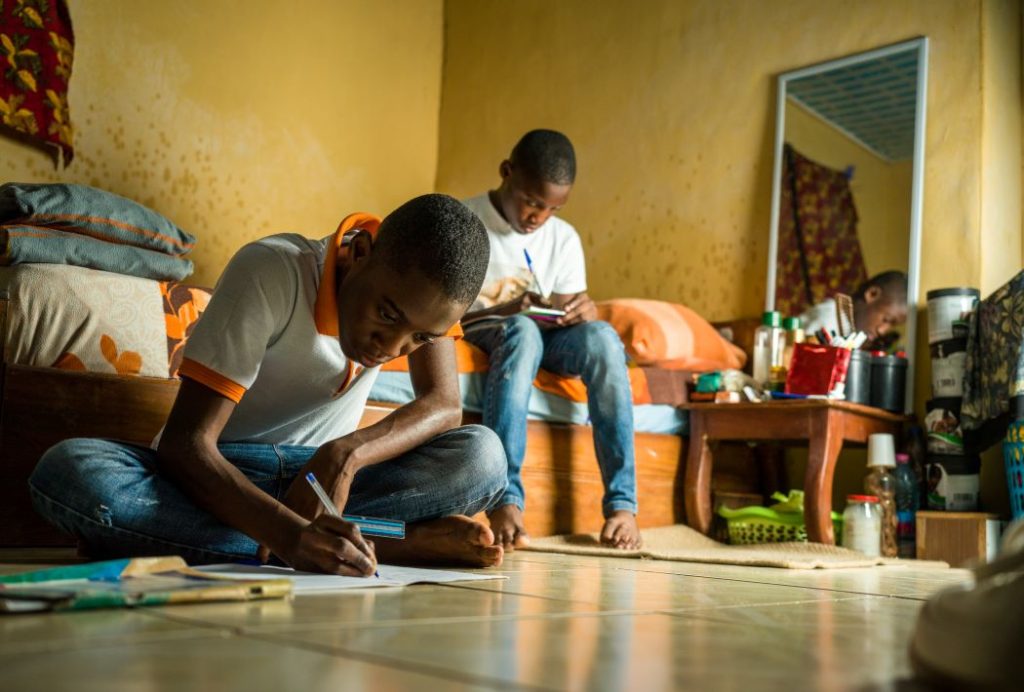
Access to education in Ghana has significantly improved over recent years, thanks to the Government of Ghana’s dedication and initiatives from the Ministry of Education. Primary education now boasts nearly 100% completion rates and gender parity—a remarkable achievement in promoting equal access for all children.
However, the challenge remains: ensuring that quality education matches this progress in accessibility. Without quality education, many children are deprived of the opportunity to acquire the skills necessary for high-value trades or professions. This perpetuates the cycle of poverty, hindering long-term economic and social development. Globally, 171 million people could be lifted out of extreme poverty if all students left school with basic reading skills. For Ghana, increasing access to quality education is pivotal to fostering a future where every individual has the opportunity to thrive.

The Reality of Education in Ghana
While children in Ghana spend an average of 11.6 years in school, only 5.7 of those years are quality-adjusted learning years, according to the World Bank. This means that children are in school but are not learning for almost six years. Due to poor curriculum materials and the lack of well-trained teachers, children fail to reach basic literacy skills by the end of primary school.
Additionally, due to barriers such as challenging commutes, lack of adequate infrastructure, and expensive school fees, many children–especially girls and people with disabilities–never set foot in quality learning environments.
Public surveys reveal that 40% of Ghanaians have either no formal education or limited post-secondary education, with girls making up the majority of those affected. People continue to clamour for interventions–by the government or other entities–to ensure equal opportunity for girls and, more broadly, address children’s educational needs.

How FINCA Is Transforming Education in Ghana
Throughout FINCA’s global network, we are constantly dreaming up innovative initiatives and forging impactful partnerships to address the multifaceted nature of poverty and empower low-income communities. Education is one of the most powerful drivers in escaping poverty. According to UNESCO, global poverty could be more than halved if all adults completed secondary school.
Empowering Students Through Rising Academies
This is why FINCA partners with social enterprises like Rising Academies. With 265,000 students in 927 schools, Rising Academies is setting a new standard for education in Ghana and West Africa. By providing exceptional curriculum materials and intensive teacher coaching, students excel in the classroom. In fact, for four consecutive years, Rising Academies students in Sierra Leone achieved a 100% pass rate in the National Primary School Examinations.
Leveraging Technology for Better Learning Outcomes
With support from FINCA and its donors, Rising Academies is creating new ways to support their students best. According to the University of Oxford and J-PAL researchers, Rising Academies’ new AI-powered mathematics tutor “Rori” reports promising early results. An eight-month study tracked 1,000 students across eleven schools in Ghana. Students who received two thirty-minute sessions with Rori, on top of their normal math lessons, had “markedly higher scores” in mathematics, with an effect size of 0.36. This effect size is considered large in the context of educational interventions. It is nearly equivalent to an additional year of learning!
A Vision for the Future
We know there is no silver bullet in eradicating global poverty. However, education remains a cornerstone of progress. Partnerships like the one between FINCA and Rising Academies demonstrate how targeted interventions can have far-reaching effects on students, families, and communities.
For Ghana, sustained investments in quality education, government initiatives, and global support offer hope for breaking the cycle of poverty and creating a future where every child has the chance to succeed.