We’re trying something new with rice farmers in northern Ghana: a bundled support package delivered in sync with the farming season.
Ayanba’s Story: Farming in Need of Support
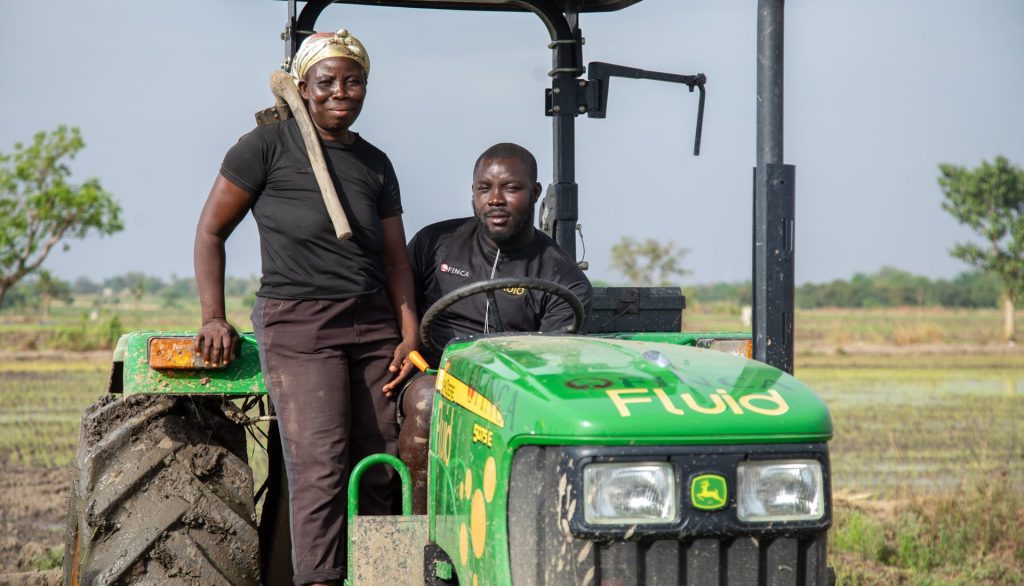
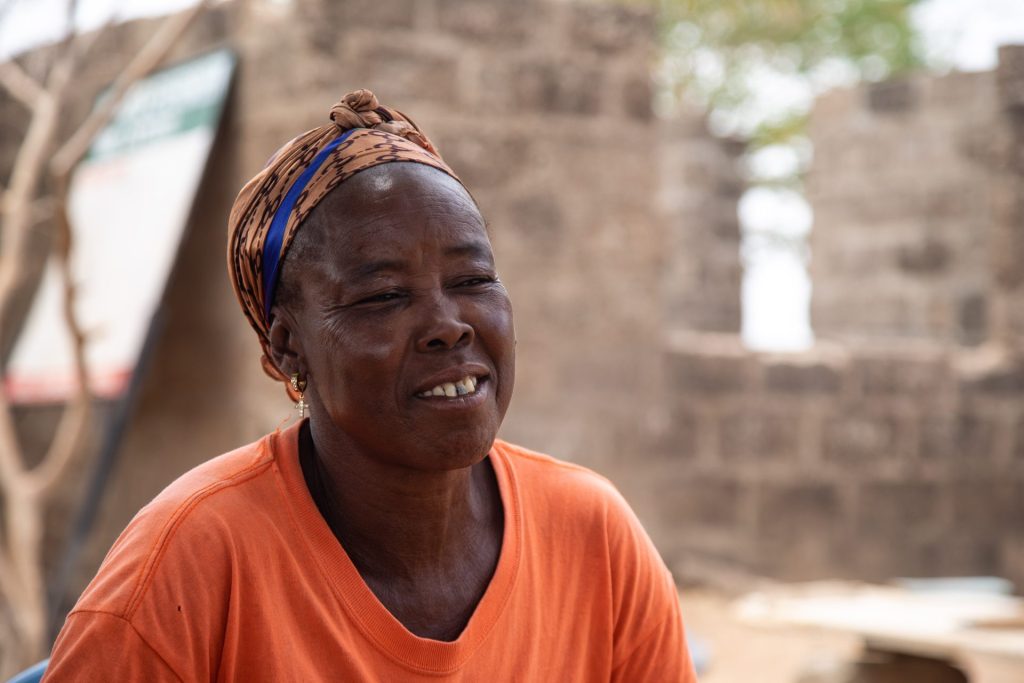
Ayanba Awonchege is a rice farmer in Navrongo, in Ghana’s Upper East Region. She doesn’t hold the title to her land — her husband does — but she’s the one who works the fields. Every season, she prepares the nursery beds, transplants the seedlings, weeds the crops, and harvests the rice.
“It is tedious,” she says. “Sometimes you can’t do it alone. You need to hire people, and that costs money we don’t always have.”
Support, when it comes, is often inadequate: scattered, incomplete, or temporary. Even when financial products are available, they don’t necessarily work for her. Repayment schedules rarely align with the rhythms of planting and harvesting. And even with a loan, it’s not always clear how to spend the money most effectively or whether the inputs and services she needs will be accessible and affordable when the time comes.
As a result, Ayanba faces constant uncertainty. She struggles to cover household costs, put food on the table, and pay her children’s school fees. She knows what her farm needs, but without the right kind of support, she’s forced to shoulder the risks and responsibilities on her own.
What if Financial Solutions Came in a Bundled Package?
For people like Ayanba, who work on land they don’t own and manage seasonal income in unpredictable conditions, traditional loans often fall short. That’s why FINCA has partnered with FLUID Finance to test something different.
In Ghana’s Upper East Region, we’re piloting a bundled, cashless support package for smallholder farmers. The goal is to replace fragmented aid with a coordinated product designed for the realities of agricultural life.
The package includes:
- High-quality seeds and fertilizer at a reduced purchase price
- Tractors and plows available exactly when needed
- Extension services and training
- Guarantee of a well-positioned buyer at a pre-agreed price
- Repayment structure aligned with harvest income cycles
Each piece is valuable on its own, but when they are delivered in sync with the right timing and coordination, they create a multiplier effect that’s much more powerful than any individual intervention. That’s what gives this package the potential to be truly transformative.
What Changed for Ayanba?
This past season, Ayanba received FINCA’s pilot support package. She didn’t have to chase inputs or guess when and if a tractor would be available. There was no borrowing from a neighbor or negotiating last-minute prices. Everything she needed was in place from the start.
“When they brought the machines, I just smiled,” she said. “For once, I could see the farm growing without being tired to death.”
Her production doubled. She had more energy, more confidence, and a clearer path to income. But perhaps the biggest shift was in her mindset: For the first time, farming didn’t feel like a fight for survival. It felt like a real opportunity.
With certainty and support behind her, Ayanba can focus on more than just getting through the season. She’s thinking ahead and even exploring the possibility of expanding her farm with two other women from her community. With the bundled services in place, that kind of growth suddenly feels within reach.
First Results are in, and so are the Lessons for Improvement
This isn’t a handout. It’s a business model designed to align the incentives of farmers, service providers, and financial partners. It’s rooted in local context, built for resilience, and structured for scale — and like any new solution, it’s still evolving.
We’ve learned a lot from the first season: what’s moving the needle, what’s still falling short, and where friction remains. That includes everything from how we reach and select farmers, to how we build user-friendly digital tools that reflect real-world decision-making — like when both husband and wife use the app, or when low literacy creates barriers to complex planning.
We’re also testing which bundling model works best for different types of farmers, especially those on plots outside of formal irrigation schemes. Should all services — inputs, tractor access, offtake — be bundled together? Or should we offer tailored service levels for smallholders, bloc farmers, and semi-commercial growers?
On the ground, we’re learning what it takes to maintain trust and quality. It’s a careful balance: sustaining close relationships while expanding field agent coverage and ensuring training keeps pace without compromising effectiveness.
Each of these insights helps us adjust and improve. With every iteration, we move closer to a model that’s not only effective in Navrongo but also adaptable across other crops, communities, and even countries, such as Tanzania or Zambia.
Expanding FINCA’s Portfolio: Financial Solutions for Complex Poverty.
At FINCA, we’ve seen firsthand how access to sustainable, scalable financial products rooted in the needs of the people they serve can transform lives. We’re committed to expanding and enhancing these tools to help individuals and communities build resilience, generate income, and invest in their children’s education.
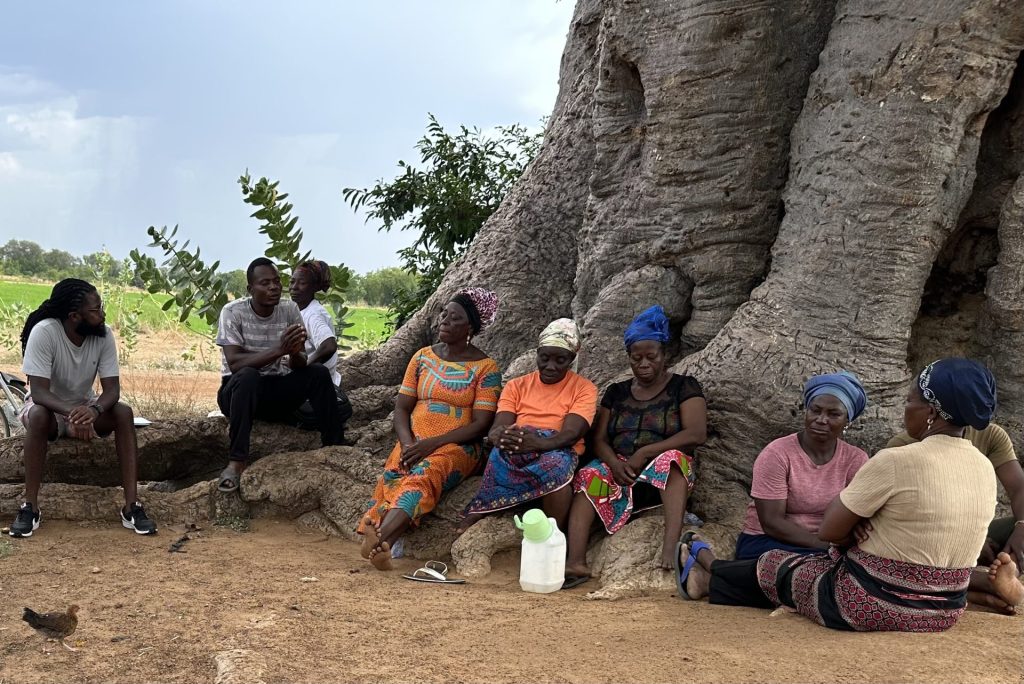
Through our Poverty Eradication Lab, we’re collaborating closely with current and potential FINCA customers to identify gaps in existing offerings — particularly for individuals like Ayanba, who are often excluded from traditional finance due to systemic barriers such as seasonal income. This work is not just about providing products but creating sustainable ecosystems that empower entire communities.
Our goal is to expand FINCA’s portfolio so we can meet more people where they are with products that truly fit their needs. By testing, learning, and improving models like the bundled farming support package, we’re working to reach more people living in poverty and create pathways to lasting economic resilience.
The potential is there. It just needs a system designed to unleash it.